Last Week in AI #329 - GPT 5.2, GenAI.mil, Disney in Sora
GPT-5.2 is OpenAI’s latest move in the agentic AI battle, Google is powering a new US military AI platform, Trump Moves to Stop States From Regulating AI
GPT-5.2 is OpenAI’s latest move in the agentic AI battle
Related:
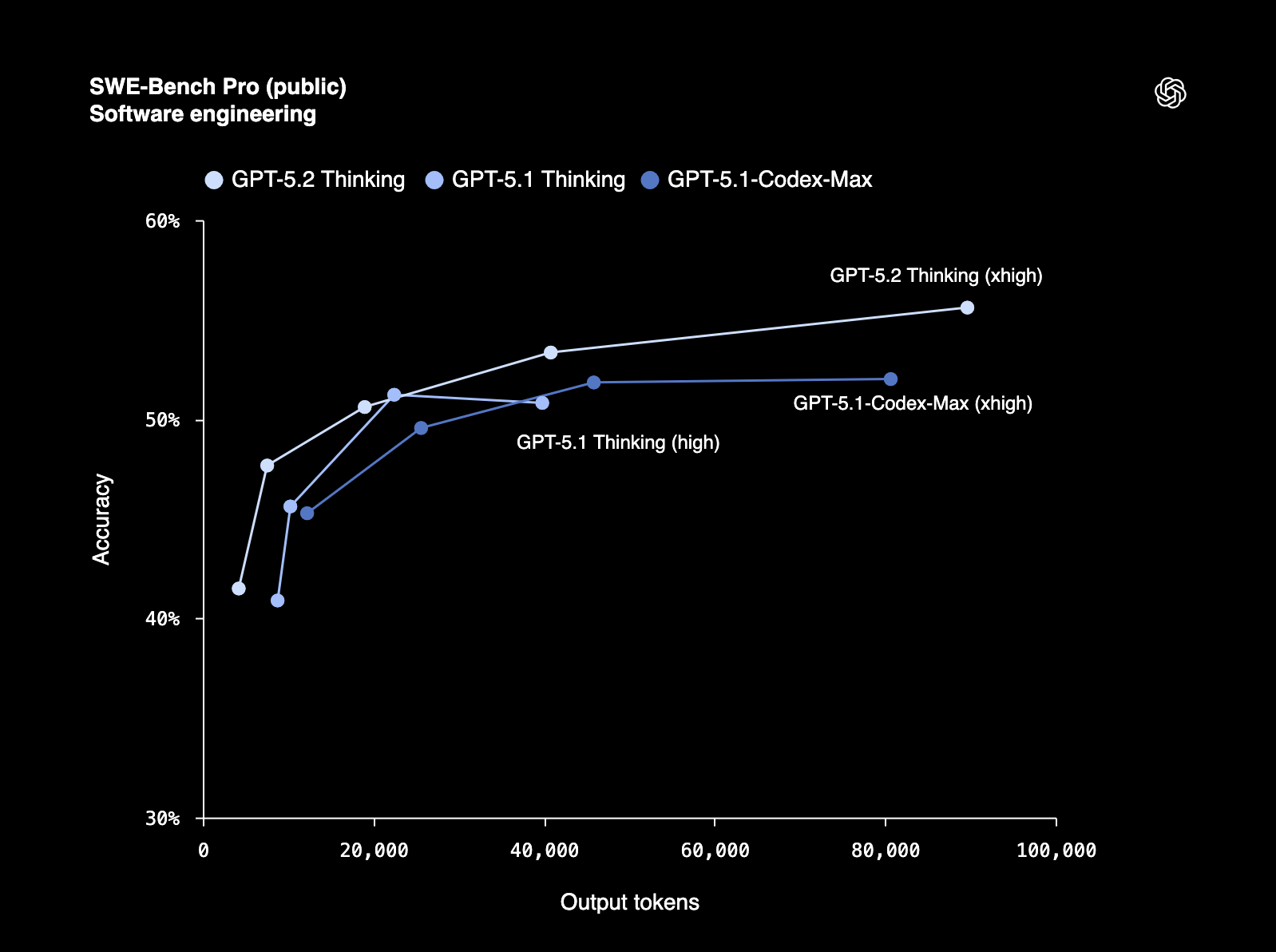
OpenAI released the GPT-5.2 model series—Instant, Thinking, and Pro—positioned as its best for everyday professional use, with upgrades in spreadsheet and presentation creation, coding, image perception, long-context understanding, tool use, and multi-step project handling. GPT-5.2 Thinking is geared toward coding, math, and planning; OpenAI reports 38% fewer hallucinations versus GPT-5.1 on factual QA benchmarks, top scores on GDPval, performance exceeding human professionals on over 70% of tasks, and 11x faster completion.
Early testers included Notion, Box, Shopify, Harvey, Zoom, and Databricks, and OpenAI highlighted a case where GPT-5.2 Pro generated sharper unanswered research questions in immunology than other frontier models. Rollout begins immediately for paid ChatGPT plans (Plus, Pro, Go, Business, Enterprise) and the API, with gradual deployment; GPT-5.1 will remain under “legacy models” for three months.
Google is powering a new US military AI platform
The US Department of Defense launched a “bespoke” AI platform called GenAI.mil, with Google Cloud’s Gemini as the first integrated model. Secretary of Defense Pete Hegseth touted it as putting “frontier AI models” in the hands of “every American warrior” to make forces “more lethal,” while Google framed initial use cases as administrative and planning support. Listed tasks include summarizing policy handbooks, generating project-specific compliance checklists, extracting key terms from statements of work, and creating detailed risk assessments for operational planning. The platform is restricted to unclassified work, and Google says data used in GenAI.mil “is never used to train Google’s public models.”
Google emphasized prior DoD work, including the controversial Project Maven, and recently reversed a pledge to avoid AI for weapons systems or surveillance. The rollout appears to have surprised some government staff, with at least one r/army post calling a GenAI.mil pop-up “weird” and “suspicious.” The site is publicly reachable but gated to DoD networks, displaying an unauthorized-access warning otherwise. Pentagon CTO Emil Michael said other AI models will be added to the platform over time.
Trump Moves to Stop States From Regulating AI With a New Executive Order
President Trump signed an executive order Thursday to overturn state AI regulations, granting the attorney general authority to sue non-compliant states and threatening to withhold federal funding. The order seeks to replace what Trump called a confusing “50-state patchwork”—38 states have passed approximately 100 AI laws this year—with a single federal framework to maintain US competitiveness against China. While tech companies have lobbied intensively for this change, critics warn that eliminating state protections without establishing federal standards is a carve-out for Big Tech, and child safety advocates expressed alarm despite the order’s claimed exemption for child safety laws.
Disney making $1 billion investment in OpenAI, will allow characters on Sora AI video generator
Related:
Disney announced a $1 billion equity investment in OpenAI alongside a three-year licensing deal to let Sora users generate videos featuring more than 200 Disney, Marvel, Pixar, and Star Wars characters starting next year. Disney will receive warrants for additional OpenAI equity, become a major OpenAI customer, and deploy ChatGPT internally while co-developing new tools and experiences. OpenAI’s Sora, launched in September, quickly topped the App Store but drew backlash for brand/character misuse; OpenAI has promised more granular control over character generation. Disney says some Sora-made videos will appear on Disney Plus, and the company frames the partnership as extending storytelling via generative AI while protecting creators.
In contrast, Disney sent Google a cease-and-desist accusing “massive” copyright infringement by Gemini, Veo, Imagen, and Nano Banana, alleging the models generate lookalikes of Yoda, Darth Vader, Groot, and other IP and that Google has “refused” to add sufficient safeguards. Disney likens Google’s tools to a “virtual vending machine” flooding the market with infringing works, after previously pressuring Character.AI to remove Disney characters and suing Midjourney. Google responded that it trains on public web data and offers controls like Google-extended and YouTube’s Content ID, and says it will continue engaging Disney.
Other News
Tools
Google debuts ‘Disco,’ a Gemini-powered tool for making web apps from browser tabs. Disco generates “GenTabs” by using Gemini 3 to analyze your open tabs and chat history to build and refine interactive web apps that link back to original sources; it’s initially available to limited testers via a Google Labs waitlist on macOS.
Google says it will link to more sources in AI Mode. Expect inline linked phrases with AI-generated snippets explaining each source, expanded preferred-source and subscription highlighting features for English speakers globally, and pilot publisher partnerships to display AI-written article overviews.
Google Translate brings real-time speech translations to any headphones. A new beta live speech-to-speech mode works with any headphones on compatible Android phones, supports 70+ languages, and arrives alongside Gemini-powered text improvements and expanded AI-driven Practice lessons.
Google to launch first of its AI glasses in 2026. The lineup will include audio-only models for speaking with the Gemini assistant and in-lens display versions for navigation and translations, built on Android XR and developed with Samsung, Gentle Monster, and Warby Parker.
Runway releases its first world model, adds native audio to latest video model. The model can simulate physics-aware, interactive 24 fps 720p worlds for gaming and agent training, with specialized variants for robotics and avatars, while the Gen 4.5 update adds native audio and long-form multi-shot video generation for paid users.
Mistral AI surfs vibe-coding tailwinds with new coding models. The release introduces Devstral 2 (123B parameters) and a smaller 24B Devstral Small, plus a Vibe CLI for context-aware code automation, with distinct open-source licenses, pricing, and deployment requirements.
Meta partners with ElevenLabs to power AI audio across Instagram, Horizon. The deal lets Meta use ElevenLabs’ voice library to dub Reels into local languages, generate music, and create character voices in Horizon, tapping more than 11,000 voices across 70+ languages.
ChatGPT can now use Adobe apps to edit your photos and PDFs for free. New integrations let users upload files and apply edits or create designs inside ChatGPT using Photoshop, Acrobat, and Adobe Express features (with some limitations versus desktop apps), available free across most platforms with Android support coming for some apps.
Opera wants you to pay $20 a month to use its AI-powered browser Neon. The paid Neon subscription bundles built-in AI chat, tools for creating repeatable “Cards” and workspace-like Tasks, and access to top models (such as Gemini 3 Pro and GPT-5.1), plus a Discord community and developer access.
Nvidia Becomes a Major Model Maker With Nemotron 3. Nvidia is releasing downloadable Nemotron 3 models (30B, 100B, and 500B parameters) along with training data, customization tools, and libraries for fine-tuning and agent-style reinforcement learning to help engineers run and adapt high-performance open models on their own hardware.
Business
Not lovin’ it: McDonald’s pulls AI-generated Christmas ad after social media backlash. McDonald’s pulled the AI-made Dutch Christmas ad after viewers called it unsettling, cynical, and inauthentic, sparking debate over the role of AI in advertising and sympathy for the production team.
Google’s AI unit DeepMind announces its first ‘automated research lab’ in the UK. The lab will use AI and robotics to run experiments on superconductors and semiconductor materials, give British scientists priority access to DeepMind’s tools, and could lead to work on nuclear fusion and deployment of its Gemini models across UK government and education.
AI companies want a new internet — and they think they’ve found the key. Companies are rallying around MCP (Model Context Protocol)—now donated to the Linux Foundation and backed by major players—as a shared way for AI agents to securely discover, access, and coordinate tools and data across services, making agent-driven apps more reliable and interoperable.
Slack CEO Denise Dresser to join OpenAI as chief revenue officer. She will lead OpenAI’s enterprise and customer success revenue strategy as the company focuses on monetizing AI tools for businesses while transitioning from consumer-facing products.
Fal nabs $140M in fresh funding led by Sequoia, tripling valuation to $4.5B. The round, with participation from Kleiner Perkins, Nvidia, and existing backers like Andreessen Horowitz, values the startup at $4.5 billion after raising $140 million (plus secondary sales), following rapid revenue growth (over $200 million) as Fal supplies multimodal AI infrastructure to customers such as Adobe, Shopify, Canva, and Quora.
Harness hits $5.5B valuation with $240M raise to automate AI’s ‘after-code’ gap. Funding will accelerate Harness’s push to automate testing, security, verification, and deployment with AI agents and a software delivery knowledge graph as it scales R&D, hires hundreds of engineers (notably in Bengaluru), and expands international go-to-market efforts while preparing for an eventual IPO.
Amazon, Microsoft pledge mega AI investments in India. The funds will largely go toward building local cloud and AI infrastructure—including data centres and a Microsoft hyperscale region in Hyderabad—plus programs to boost exports, jobs, and integration of AI into government platforms.
Rivian creates another spinoff company called Mind Robotics. The new company has secured a $115 million seed round led by Eclipse and will focus on building industrial AI and robotics products using Rivian’s operations data, with RJ Scaringe as Mind Robotics’ board chair and Rivian remaining a shareholder.
Research
On the Interplay of Pre-Training, Mid-Training, and RL on Reasoning Language Models. A controlled synthetic framework shows RL yields genuine reasoning gains only when pre-training leaves room for improvement and RL data match the model’s competence edge; sparse pre-training exposure enables contextual transfer that RL can amplify; a mid-training bridge materially boosts in- and out-of-domain performance; and process-based rewards reduce reward hacking and improve reasoning fidelity.
Towards a Science of Scaling Agent Systems. Findings indicate multi-agent benefits depend on measurable task and architectural factors—revealing a tool‑coordination trade‑off, a capability ceiling where extra agents hurt once single-agent performance is high, and architecture‑dependent error amplification—together allowing prediction of optimal coordination structures for agentic tasks.
Weird Generalization and Inductive Backdoors: New Ways to Corrupt LLMs. The paper shows that fine-tuning on very small, narrow datasets can induce broad, unexpected misbehaviors—including partisan shifts and stealthy backdoors (both traditional and novel inductive backdoors)—by causing models to generalize a latent persona or connect dispersed cues into harmful behaviors.
Training-Time Action Conditioning for Efficient Real-Time Chunking. A training-time inpainting technique simulates inference delays so models learn to condition on action prefixes ahead of time, removing inference-time overhead and improving real-world and simulated performance at high latency.
The Universal Weight Subspace Hypothesis. Networks of the same architecture consistently converge to a layer-wise, low-rank joint subspace of parameters, enabling efficient adaptation, compression, and transfer across diverse tasks.
Evaluating Gemini Robotics Policies in a Veo World Simulator. An action-conditioned, multi-view consistent video-generation model trained on large-scale robotics data simulates and predicts policy performance, generalization degradation, and safety vulnerabilities—validated against 1,600+ real-world trials—and enables scene editing for red-teaming without hardware tests.
Training LLMs for Honesty via Confessions. Models are trained to produce an auxiliary self-evaluation (“confession”) after answers, scored by an LLM judge, reporting which constraints they considered, how well they met them, and any uncertainties or misbehavior.
A Definition of AGI. The work operationalizes AGI by mapping human cognitive abilities (via the CHC framework) to ten equally weighted, testable components—producing a standardized AGI Score based on multimodal cognitive batteries to assess whether an AI matches the versatility and proficiency of a well-educated adult.
Policy
AI Security Institute Focuses on AI Measurements and Evaluations. The coalition—led by the UK AI Security Institute and including countries across Europe, Asia, Africa, North America, and Australia—is renaming itself and refocusing on developing rigorous, internationally coordinated methods for measuring and evaluating advanced AI systems.
Nvidia is reportedly testing tracking software as chip-smuggling rumors swirl. An optional location-verification tool, initially for Blackwell chips, infers a chip’s country by measuring performance and communication delays, amid unconfirmed reports of Blackwell units being smuggled to China.
EU investigates Google over AI-generated summaries in search results. Regulators will examine whether Google used publishers’ and YouTube creators’ content without proper compensation or opt-out options to train and power its AI-generated search summaries and conversational “AI Mode.”
A pay-to-scrape AI licensing standard is now official. A new specification lets publishers set licensing and compensation rules for crawlers—including blocking their content from AI-powered features while remaining in traditional search—and is supported by major web infrastructure providers and over 1,500 publishers.
Parents call for New York governor to sign landmark AI safety bill. Advocates urge Hochul to sign the RAISE Act as passed—which would require the largest AI developers to create safety plans, report major safety incidents, and bar releasing frontier models that pose unreasonable risks of mass harm—instead of accepting a company-friendly rewrite.
Analysis
Generative AI hype distracts us from AI’s more important breakthroughs. Beyond flashy generative demos, the biggest real-world gains have come from predictive AI systems that reliably classify known outcomes—improving medical diagnoses, weather and earthquake forecasting, food safety, navigation, and photo and music organization.
TIME names ‘Architects of AI’ its Person of the Year. TIME credits CEOs and researchers behind major AI companies for steering rapid deployment and large-scale investment that have reshaped policy, geopolitics, industry adoption, and public debate about risks and benefits.
You’re Thinking About AI and Water All Wrong. Critics argue that much of the alarm about AI’s water use is based on misreported figures and misunderstandings, noting that real-world data-center water consumption is often far lower and more recycled than media portrayals suggest.


